
Indian game development reaches new heights with Kaal Yoddha, an action adventure title rooted in ancient Indian mythology. After playing the free demo version available on Steam, I’m sharing an honest, comprehensive review covering gameplay mechanics, graphics quality, combat systems, and whether this Made in India game delivers on its ambitious promise of bringing mythological storytelling to modern gaming.
This detailed analysis explores Curse of The Mask: Kaal Yoddha, developed by Mumbai based Treta Studios. The game casts players as Prince Avyaan, a skilled warrior and archer answering a distress call from a cursed island plagued by demons. Everything discussed comes from actual gameplay experience with the demo version currently available free on Steam.
Quick Navigation:
- What is Kaal Yoddha
- Story and Setting
- Gameplay Mechanics
- Graphics and Performance
- Major Issues and Problems
- Boss Fight Experience
- Should You Play It
- How to Download
Watch Full Gameplay Video
Watch my complete gameplay video showing actual combat, exploration, boss battles, and honest reactions to Kaal Yoddha’s demo version. You’ll see unedited gameplay revealing both impressive elements and frustrating problems.
The video shows genuine gameplay experience without editing out the difficult parts.
What is Kaal Yoddha
Kaal Yoddha represents an ambitious attempt by Indian developers to create action adventure games comparable to international titles while incorporating Indian mythology and cultural elements.
Game Overview:
Kaal Yoddha is a third person action adventure game developed by Treta Studios in Mumbai. The game features Prince Avyaan, a brave warrior and skilled archer on a cursed island plagued by evil demons. Players explore dark environments, battle demonic creatures, and uncover mysteries tied to ancient masks and forgotten kingdoms.
Developer Background:
Mumbai based Treta Studios develops this action adventure game where you play as a skilled archer. The studio joins a growing wave of Indian developers creating premium PC games based on Indian mythology rather than mobile focused casual titles.
Current Status:
The game remains in development with a free demo version available on Steam. The full release is scheduled for late 2026 according to current plans. The demo provides approximately two hours of gameplay showcasing early sections including exploration, combat, and a challenging boss encounter.
Genre and Gameplay Style:
The game combines dynamic combat using bow and arrow or sword to strike enemies from near and far. Exploration involves parkour elements including climbing, jumping, and navigating environmental obstacles. The combat incorporates elements from souls like games with dodge mechanics and challenging enemy encounters.
Cultural Significance:
This game joins other upcoming Indian titles attempting to bring Indian mythology and culture to mainstream gaming audiences. Unlike surface level cultural references, Kaal Yoddha builds its entire narrative and aesthetic around ancient Indian legends and spiritual concepts.
Language Options:
The game features full Hindi voice acting and dialogue, creating authentic cultural immersion rarely found in action games. Characters speak in formal, traditional Hindi using terminology from ancient texts and classical literature.
Target Audience:
The game targets players interested in Indian mythology, action adventure gameplay, and supporting homegrown game development. Fans of third person action games like Uncharted, God of War, and souls like titles form the core demographic.
Story and Setting
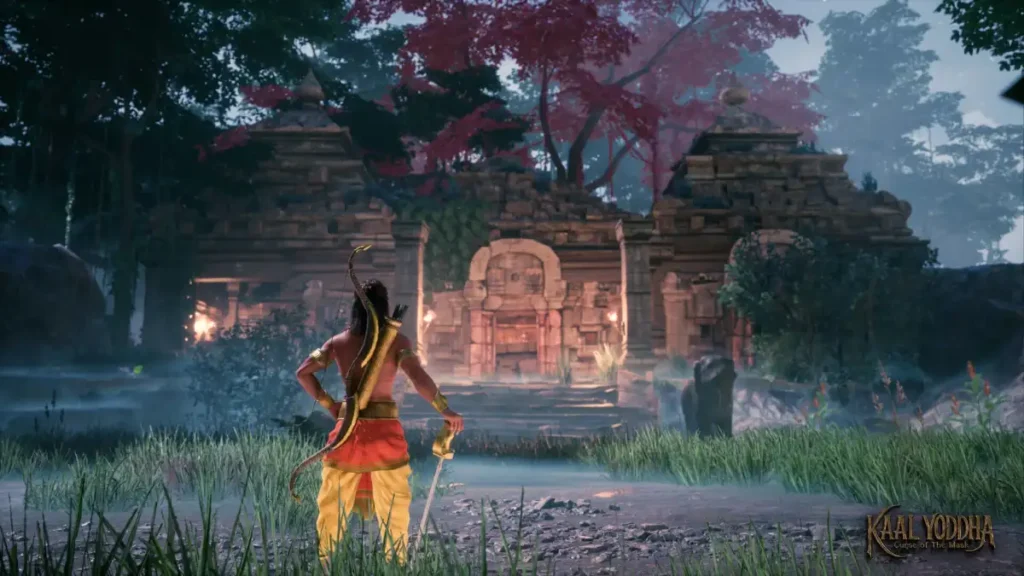
The narrative draws from Indian mythology to create a dark fantasy tale of curses, demons, and heroic intervention.
Opening Premise:
The game begins with a mysterious letter from a sage seeking help for an island consumed by darkness. Prince Avyaan, eldest son of King Chandravahan, answers this call despite warnings of extreme danger threatening the cursed land.
The Cursed Island:
The island of Ratnadweep once thrived as a peaceful, prosperous land. However, a supernatural catastrophe struck when masked demons suddenly appeared like a violent storm. These creatures possessed by dark evil forces attacked villagers without mercy.
The Demon Masks:
Ancient masks containing malevolent power form the core mystery. These masks transform ordinary beings into monstrous creatures serving dark forces. The connection between the masks and the spreading corruption drives the investigation forward.
Sage Character:
A surviving sage provides exposition and guidance. He witnessed the demonic attack that consumed the island and sends the letter requesting help. During gameplay, he offers the fire weapon called Jwalastra blessed by Agni, the fire deity.
Captive Sage:
Another sage named Satyakam was captured by demons during a protective ritual and taken into dark caves. Rescuing this captured sage and stopping the spreading evil becomes Prince Avyaan’s primary mission.
Environmental Storytelling:
The island transitions through diverse environments. Starting at ocean shores, the journey leads through dense forests, across wooden bridges, into villages destroyed by demonic attacks, and finally toward ominous caves hiding terrible secrets.
Hindi Dialogue:
Characters speak in formal, classical Hindi filled with traditional expressions and spiritual terminology. Phrases like “Om Namah Shivaya” (devotional chant), “Ayushmaan Bhava” (blessing for long life), and “Kshatriya” (warrior caste) create authentic cultural atmosphere.
Atmospheric Details:
Blood stained ground shows recent violence. Dead deer indicate demonic feeding. Burning fires suggest ongoing rituals or recent battles. These environmental details build tension and reveal the island’s tragic transformation.
Tone and Atmosphere:
The narrative maintains serious, dramatic tone appropriate to mythological storytelling. Darkness pervades both literally through lighting choices and thematically through the desperate situation facing the island’s remaining survivors.
Gameplay Mechanics and Combat
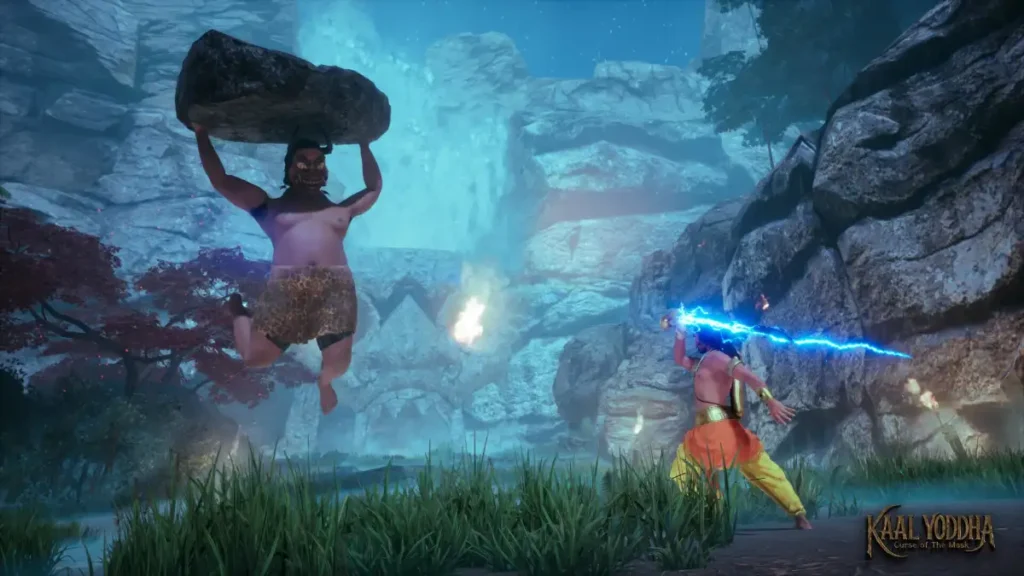
Understanding the core gameplay systems reveals both ambition and execution challenges in Kaal Yoddha’s demo.
Movement and Exploration:
Third person perspective follows Prince Avyaan through various environments. Basic movement includes walking, running, jumping, and climbing. Parkour elements require timing jumps across gaps and scaling cliffs using designated climbing paths.
Combat System:
Dynamic combat allows engaging enemies as a fierce fighter using bow and arrow or sword to strike from near and far. Melee combat involves basic sword attacks and dodging enemy strikes. Ranged combat uses bow and arrow for distant enemies or tactical advantages.
Fire Weapon Mechanic:
The Jwalastra fire weapon becomes available after meeting the sage. This special ability allows destroying specific environmental obstacles blocking paths and clearing groups of weaker enemies efficiently. Limited uses require strategic deployment.
Climbing Mechanics:
Designated climbing sections require navigating rock faces and environmental structures. The system indicates climbable surfaces through visual markers. Execution feels stiff with awkward animations and imprecise controls.
Enemy Variety:
Regular demon soldiers attack in groups requiring crowd control. Special enemies like the deer eating demon showcase unique designs. The boss demon represents significant difficulty spike with aggressive attack patterns.
Health System:
A health bar depletes from enemy damage. No visible healing items or recovery mechanics appear during exploration. Death resets to checkpoints requiring repeating sections.
Camera Controls:
Third person camera follows behind the character. Camera control feels sluggish during combat making tracking fast moving enemies challenging. The perspective sometimes creates blind spots during intense fights.
Environmental Interaction:
Breaking through fire obstacles uses the special weapon. Wooden bridges provide crossing points. Interactive elements remain limited with straightforward progression paths.
Dodge Mechanics:
Dodging enemy attacks requires timing. The dodge animation lacks responsiveness creating frustrating moments when inputs don’t register properly or execute too slowly.
Lock On System:
No apparent lock on targeting exists making bow aiming and melee combat targeting feel imprecise during chaotic encounters with multiple enemies.
Graphics and Performance Analysis
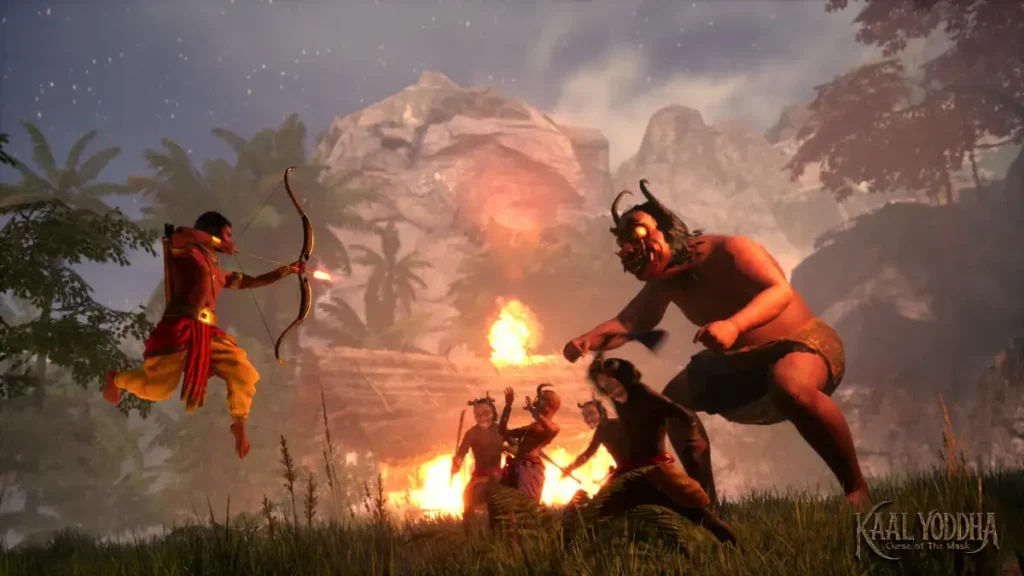
Visual presentation reveals mixed results with ambitious goals constrained by technical limitations.
Overall Visual Quality:
The graphics aim for realistic aesthetics with detailed character models and environmental textures. Results vary significantly between different elements. Some areas look polished while others appear rough and unfinished.
Character Models:
Prince Avyaan features detailed clothing and armor. However, hair physics remain static without natural movement during running or combat. Character animations sometimes appear stiff lacking fluid transitions between actions.
Environmental Design:
Forest areas show decent vegetation density and natural lighting. Caves emphasize darkness creating oppressive atmosphere. Villages display destruction with blood effects and corpse placement establishing tone.
Lighting Effects:
Dynamic lighting from fires creates atmospheric shadows. Darker areas sometimes become too dim making navigation difficult. The fire weapon produces glowing effects highlighting its supernatural nature.
Animation Quality:
Combat animations lack polish with jerky transitions. Climbing animations appear particularly rough with characters clipping through geometry or moving unnaturally. Running animations work reasonably but nothing special.
Performance Issues:
The demo experiences frame rate drops during combat encounters with multiple enemies. Loading transitions between areas cause brief stutters. Overall optimization needs improvement for smooth consistent performance.
User Interface:
The UI elements appear functional but basic. Health bars and ability indicators serve their purpose without visual flair. Menu systems work adequately though presentation could improve.
Environmental Details:
Some areas showcase impressive detail like realistic water reflections and dense foliage. Other sections appear sparse with repetitive textures and limited environmental variety.
Comparison to Uncharted:
The game attempts cinematic presentation similar to Uncharted series with dramatic camera angles and environmental storytelling. Execution falls short of that polish but shows understanding of those design principles.
Technical Limitations:
The visuals reveal budget constraints and development timeline pressures. Ambition exceeds current execution resulting in uneven quality across different systems and areas.
Major Issues and Problems
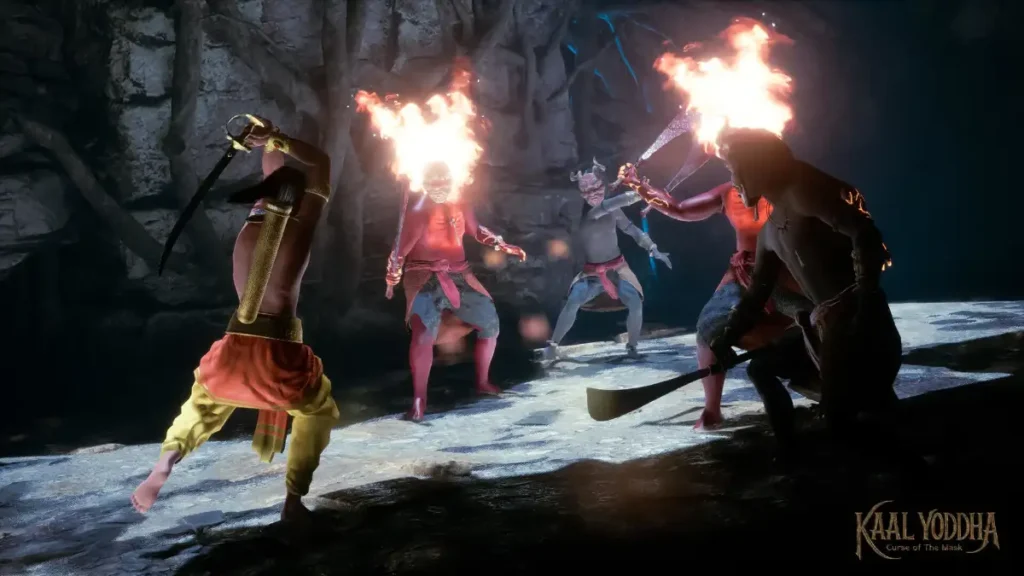
Honest assessment requires discussing significant problems diminishing the gameplay experience.
Control Responsiveness:
Controls feel sluggish and unresponsive. Input lag between pressing buttons and character actions creates frustration especially during combat requiring precise timing. This fundamental issue affects every gameplay aspect.
Character Positioning:
The character positioning creates issues with mechanics barely functioning and lackluster combat. The character model appears pushed toward screen edges rather than centered making spatial awareness difficult during navigation and combat.
Climbing System:
The implementation of climbing represents the worst seen in recent games. Characters clip through walls, animations don’t match geometry, and inputs frequently fail to register causing falls and deaths from technical failures rather than player mistakes.
Combat Balance:
Enemy damage output feels excessive compared to player survivability. Regular enemies deal heavy damage while the player has limited health and no apparent healing during exploration. This imbalance creates excessive difficulty from design problems rather than intentional challenge.
Jump Mechanic:
Jump inputs sometimes don’t register forcing repeated attempts. Other times jumps execute unexpectedly causing accidental deaths. Inconsistent jump response makes platforming sections frustrating lottery rather than skill based challenge.
Camera Problems:
During combat, the camera frequently positions poorly obscuring enemies or getting blocked by environmental geometry. Manual camera control feels slow making quick adjustments difficult during fast paced encounters.
Audio Mixing:
Sound volume levels vary dramatically. Some effects play too loudly while important audio cues get drowned out. Voice acting volume seems inconsistent requiring constant manual adjustment.
Enemy AI:
Enemy behavior appears simplistic with predictable patterns. Groups don’t coordinate effectively. Some enemies get stuck on geometry or exhibit strange pathfinding creating unintentionally easy encounters.
Physics Glitches:
Character physics occasionally malfunction causing awkward movements or getting stuck on environmental features. Enemies sometimes clip through surfaces or display unnatural animations.
Missing Polish:
Overall lack of polish pervades every system. Individual mechanics function at basic level but lack refinement, testing, and iteration necessary for quality gameplay experience. Everything feels early and unfinished.
Boss Fight Challenges
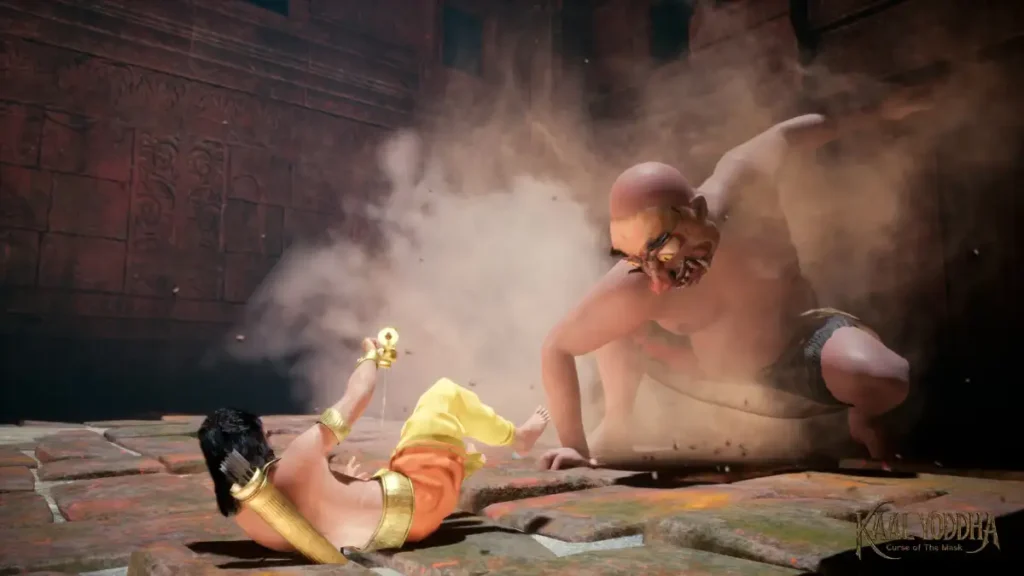
The first boss encounter exemplifies both difficulty design and technical execution problems.
Boss Introduction:
A giant demon wearing ornate mask serves as the first major boss. This massive enemy dwarfs Prince Avyaan creating intimidating visual presence. The demon appears after exploring caves and fighting regular enemies.
Attack Patterns:
The boss executes powerful jumping attacks covering significant distance. Ground pounds create area effects. Melee swipes deal devastating damage. Attack telegraphing remains minimal making dodges difficult to time properly.
Damage Output:
Boss attacks can kill in approximately two hits, leaving players with dangerously low health requiring constant running to avoid attacks. This extreme damage forces pure evasion rather than balanced offense and defense gameplay.
Combat Strategy:
The intended approach involves maintaining distance, dodging attacks, and counterattacking during brief openings. However, technical issues make executing this strategy incredibly difficult despite understanding the concept.
Technical Problems:
During the boss fight, controls become even less responsive. Dodge inputs fail to register. Running sometimes stops working. The character gets stuck on invisible geometry. These technical failures cause deaths independent of player skill or strategy.
Difficulty vs Broken:
Players report trying the boss fight three times with the same death pattern occurring, questioning whether the difficulty represents intentional hard mode or broken design. The line between challenging and unfair becomes blurred by technical issues.
Frustration Factor:
Dying to boss attacks feels acceptable. Dying because controls stopped working or the character got stuck feels unacceptable. The majority of deaths result from technical problems rather than learning attack patterns.
Health Management:
No healing items or recovery mechanics exist during the fight. The two hit death combined with control issues creates nearly impossible challenge for most players experiencing technical problems.
Arena Design:
The boss arena provides adequate space for maneuvering. However, invisible collision issues and character getting stuck on level geometry negate the intended design.
Victory Impossibility:
For many players, defeating this boss in the demo version proves effectively impossible due to technical issues. This creates terrible first impression and discourages continued engagement.
Should You Play Kaal Yoddha
Deciding whether to try the demo requires weighing cultural significance against current technical state.
Reasons to Try:
The game represents important step for Indian game development. Supporting homegrown studios creating ambitious projects matters for industry growth. The mythological setting and Hindi voice acting offer unique cultural experience.
Reasons to Wait:
The demo suffers from severe technical problems affecting core gameplay. Controls, combat, climbing, and boss fights all exhibit significant issues. Frustration likely outweighs enjoyment for most players in current state.
Demo Purpose:
The free demo serves as early alpha test gathering feedback before full release. Developers likely know about major issues and plan improvements. Trying the demo helps developers but don’t expect polished experience.
Setting Expectations:
Players note the game attempts creating bigger experiences than current capabilities allow, with not a single mechanic passing the first polish threshold and everything feeling janky. Approach with understanding this represents work in progress.
Cultural Value:
Experiencing Indian mythology in interactive format has inherent value regardless of technical quality. The Hindi dialogue, spiritual references, and cultural authenticity provide something unavailable in mainstream gaming.
Supporting Indian Gaming:
India’s gaming industry is valued at over 2.4 billion dollars in 2025 with over 500 million players, but most focus on mobile and casual games. Premium PC games like Kaal Yoddha represent new direction deserving support despite current problems.
Patience Required:
If you value supporting Indian game development and can tolerate significant technical issues, try the demo. If you expect polished gameplay comparable to international AAA titles, wait for substantial updates or final release.
Free Demo Advantage:
The demo costs nothing. Downloading and trying involves no financial risk. Even if the experience frustrates, seeing an Indian mythology game firsthand has educational value about industry progress.
Potential Improvement:
Developers aim to deliver alpha testing stage by end of 2026. Current demo represents even earlier development state. Significant improvement should occur before final release if developers address feedback seriously.
How to Download Kaal Yoddha Demo
Getting the demo requires accessing Steam’s platform where the free version is currently available.
Steam Platform Required:
The demo exclusively releases on Steam. You need Steam client installed on your Windows PC. Steam provides free download from their official website.
Step by Step Download:
- Install Steam: Download and install Steam client from store.steampowered.com if not already installed
- Create Account: Register free Steam account if you don’t have one
- Search Game: Open Steam and search “Kaal Yoddha Demo” in the search bar
- Game Page: Click the game from search results to reach its store page
- Download Demo: Click “Download Demo” button on the game’s Steam page
- Install: Let Steam download and install the demo automatically
- Launch: Click “Play” in your Steam library once installation completes
Direct Steam Link:
DOWNLOAD KAAL YODDHA DEMO FROM STEAM
System Requirements:
The game requires Windows PC with reasonably modern specifications. Minimum requirements include Windows 10, DirectX 11 compatible graphics card, 8GB RAM, and approximately 5GB storage space.
Demo Content:
The demo provides roughly two hours of gameplay including exploration, combat tutorials, enemy encounters, environmental puzzles, and the first major boss fight.
Full Game Status:
The complete game remains in development targeting late 2026 release. The demo represents early development stage intended for gathering player feedback and testing core systems.
Alternative Versions:
Currently no mobile version exists. The game focuses on PC platform with potential console releases depending on PC version success.
Graphics Settings and Optimization
Adjusting settings helps improve performance on various PC configurations.
Graphics Options:
The demo includes basic graphics settings for quality levels, resolution, and rendering options. Start with medium settings and adjust based on your PC performance.
Performance Tips:
Lower shadow quality and reduce draw distance if experiencing frame rate drops. Close background applications before playing. Update graphics drivers to latest versions for best compatibility.
Resolution Scaling:
Reducing resolution improves frame rates significantly. The game functions acceptably at 1080p on mid range hardware. Lower end systems might require 720p for smooth performance.
Expected Performance:
Modern mid range PCs should achieve 30 to 60 FPS on medium settings. High end systems can push higher settings though optimization issues may prevent consistent high frame rates.
Future Development and Updates
Understanding the development roadmap helps set realistic expectations for improvement.
Current Development Stage:
The demo represents early alpha or pre alpha state. Major systems exist but lack polish and refinement. Expect substantial changes before final release.
Developer Feedback:
Treta Studios emphasizes showing actual gameplay footage rather than just cinematics, with two hours of gameplay in the demo and commitment to delivering alpha testing by end of 2026. This transparency suggests serious development approach.
Expected Improvements:
Based on feedback, developers should prioritize fixing control responsiveness, climbing mechanics, combat balance, and boss fight fairness. These represent most critical issues affecting player experience.
Community Reception:
Community feedback includes harsh criticism about mechanics barely functioning and horrible voice acting, indicating significant work needed before final release. However, constructive criticism helps developers identify priorities.
Release Timeline:
Full game targets late 2026 release. This provides approximately one year for polish, testing, and implementing feedback from demo responses. Realistic timeline depends on team size and resources.
Industry Context:
Kaal Yoddha joins a wave of ambitious 2026 Indian games leveraging rich mythology, representing a high stakes shift facing major technical challenges. Success of early releases influences industry momentum and investor confidence.
Comparison to Other Indian Mythology Games
Kaal Yoddha exists within growing ecosystem of Indian games exploring cultural themes.
Raji An Ancient Epic:
Raji pioneered Indian mythology in action adventure gaming with polished execution and positive reception. Kaal Yoddha aims for similar cultural authenticity but currently lacks comparable technical quality.
The Age of Bhaarat:
This celebrity backed project from Tara Gaming, co founded by actor Amitabh Bachchan, aims to be India’s first global AAA game but faces polarized community reception with critics calling it a clone with awful combat. Kaal Yoddha shares similar ambitions and faces similar skepticism.
Asura:
Another souls like game based on Indian mythology. The genre popularity among Indian developers reflects desire to combine challenging gameplay with cultural storytelling.
Market Positioning:
Kaal Yoddha targets players wanting authentic Indian mythology without mobile gaming limitations. The premium PC approach differentiates from casual mobile titles dominating Indian gaming market.
Final Thoughts
Kaal Yoddha demonstrates both promise and problems characteristic of ambitious indie development with limited resources.
The game deserves recognition for attempting serious action adventure gameplay rooted in Indian mythology. The Hindi voice acting, spiritual themes, and cultural authenticity create experiences unavailable elsewhere. Supporting Indian developers pursuing premium games rather than only mobile casual titles matters for industry diversification.
However, the demo suffers from severe technical issues affecting every aspect of gameplay. Control responsiveness, climbing mechanics, combat balance, and boss design all require substantial improvement. The gap between ambition and execution currently prevents recommending the game based on pure gameplay quality.
The demo serves its purpose as early feedback gathering tool. Developers receive clear signal about what needs fixing before final release. Players interested in Indian game development journey should try the demo understanding current limitations.
Whether Kaal Yoddha ultimately succeeds depends on developers addressing fundamental technical problems during remaining development time. The foundation exists but requires extensive polish, testing, and refinement. One year until projected release provides opportunity for improvement if resources and commitment align.
For supporters of Indian gaming, try the free demo. For players demanding polished experiences, wait for substantial updates or final release reviews. The cultural significance and mythological storytelling create value beyond current technical execution, but honest assessment acknowledges serious problems requiring solutions.
Experience Indian mythology gaming while supporting local development, but prepare for rough technical implementation! 🎮🏹
Thanks for reading this honest review! Found it helpful? Share with friends interested in Indian game development and explore more gaming content below.